
Electrical Systems Compromised by Storm Events
Storm Damage Electrical Repairs in Texarkana for homes with failed exterior lighting, damaged outdoor panels, or interior wiring compromised by lightning strikes, falling branches, or water exposure
Texarkana's position in the Ark-La-Tex corridor places it in one of the more active lightning and severe thunderstorm corridors in the South, where direct strikes, surge events, and falling-branch damage to service entrance equipment are recurring patterns after major storm seasons. Maverick & Moore Deck and Home Improvement addresses storm-related electrical damage for residential properties in Texarkana, covering exterior lighting systems, outdoor panels, and interior wiring compromised by lightning, branch impact, or water intrusion. Homeowners dealing with dead exterior circuits, non-functional outdoor panels, or interior fixtures and outlets that stopped working after a storm are the primary candidates for this repair scope.
Storm-related electrical damage presents differently depending on the cause: a direct lightning strike typically destroys the entry point and sends a voltage surge through connected branch circuits, while water intrusion into junction boxes and exterior panel enclosures creates corrosion and insulation breakdown that may not produce an immediate failure. Branch damage to service entrance conductors or weatherheads creates visible physical damage at the contact point that requires utility coordination before the homeowner's electrical system can be safely accessed. Each cause requires a different diagnostic approach before repair work begins, which is why inspection precedes any component replacement.
Schedule an electrical damage inspection to identify which circuits, fixtures, or panel components require repair or replacement.
What Storm Electrical Repairs Actually Address
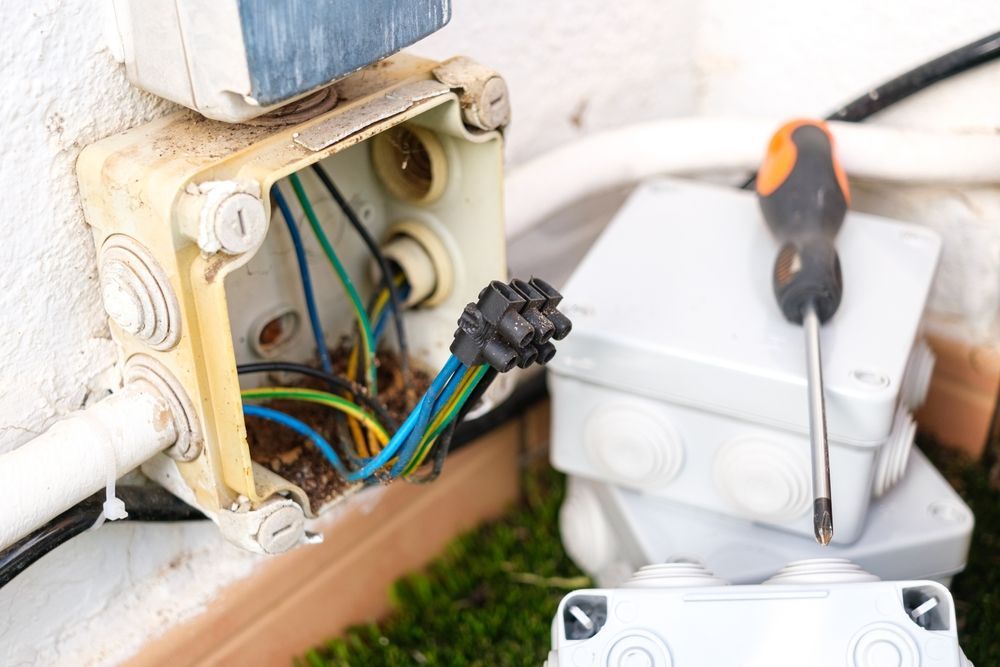
Exterior lighting repair after storm damage involves more than replacing a fixture—water intrusion into outdoor junction boxes corrodes wire connections and degrades conductor insulation inside the box, creating failures that recur even after a new fixture is installed. Outdoor panel damage from branch impact or lightning surge requires assessment of breaker hardware, bus bars, and any surge protection devices installed in the enclosure before the panel returns to service. Interior wiring damage from lightning-induced surges follows the path of least resistance through branch circuits, and identifying which circuits were affected requires systematic testing rather than visual inspection.
After exterior lighting repairs are finished, fixtures that went dark following the storm restore to normal operation, and junction box integrity is confirmed so the repair holds through subsequent wet weather. Indoor circuits affected by surge or water damage restore function at the outlets, switches, and fixtures connected to them, eliminating dead circuits and intermittent failures that developed after the storm event. Maverick & Moore's outdoor panel repairs restore the ability to operate exterior circuits and equipment that went offline when the enclosure sustained damage.
The scope of storm electrical repair depends significantly on whether damage came from surge, physical impact, or water exposure—each produces a different failure pattern requiring different repair methods. Exterior electrical repairs in Texarkana must account for the region's humidity and rain frequency even after the immediate storm damage is addressed, since unsealed junction boxes and conduit entries will accumulate moisture that degrades connections between storm events. Some storm-related electrical failures are immediately apparent, while others develop gradually as water-corroded connections deteriorate—a thorough inspection covers more than the circuits already showing visible failure.
Common Questions About Electrical Storm Damage
Storm-related electrical damage is often less visible than structural damage, and the following questions address how the inspection and repair process works and what property owners can expect.
How does lightning damage differ from branch-impact damage to electrical systems?
A lightning strike destroys the point of entry and sends a voltage surge through connected circuits, while branch impact causes physical damage at the point of contact—both require inspection, but the diagnostic process and the affected components differ significantly between the two.
What causes exterior lighting to fail after a storm even when the fixture appears undamaged?
Water intrusion into the junction box behind the fixture corrodes wire connections and degrades conductor insulation, causing circuit failure even when the fixture housing is visually intact—replacing the fixture without addressing the junction box doesn't resolve the underlying failure.
When should outdoor electrical panels be inspected after storm damage?
Any time a panel enclosure shows visible impact damage, signs of water entry, or connected circuits are behaving abnormally after a storm, inspection before continued use is appropriate.
Why does Texarkana's climate affect how exterior electrical repairs are completed?
The region's high humidity and frequent rainfall mean outdoor junction boxes, conduit entries, and panel enclosures require weathertight sealing on any repair—unsealed openings accumulate moisture that degrades connections and insulation between storm events.
What interior wiring problems result from lightning-induced surge events?
Surge damage typically destroys outlet receptacles and circuit breaker hardware along affected branch circuits; outlets may appear physically intact while internal components were rendered non-functional by the voltage event.
Electrical damage after storm events doesn't always appear at the surface—corroded connections and surge-damaged components may seem functional until they fail under load. Maverick & Moore Deck and Home Improvement inspects the full scope of storm-related electrical damage, from exterior fixtures and outdoor panels to interior branch circuits affected by lightning or water exposure—set up that inspection to establish what the repair scope involves before any work begins.