
Decks Rebuilt After Tree Limb Damage
Deck & Structural Storm Restoration in Texarkana for porches and decks struck by falling tree limbs with cracked boards, compromised framing connections, or debris embedded in the deck surface
After storm debris is cleared, structural connections are reinforced, and replacement boards are installed, a deck struck by a falling tree limb can carry its intended load again with a surface that shows no evidence of the damage it sustained. Maverick & Moore Deck and Home Improvement produces that result for properties in Texarkana through structural storm restoration work that addresses both the visible surface damage and the framing connections beneath it. Homeowners with decks showing broken boards, shifted ledger attachments, or posts driven off their footings need this work completed before the structure is put back in use.
Structural assessment after a tree limb strike begins at the surface but doesn't end there—a limb that split three boards on impact may have also transferred its load to the rim joist, ledger board, or post-beam connections below. Maverick & Moore evaluates each structural layer independently, since a visually intact joist can carry a compression split that only becomes apparent under load. Board replacement follows structural repair, and pressure washing removes the compacted mud, bark fragments, and organic debris that limb impacts embed in deck surfaces and between boards.
Arrange a structural evaluation to confirm what's damaged below the surface before replacement boards are installed.
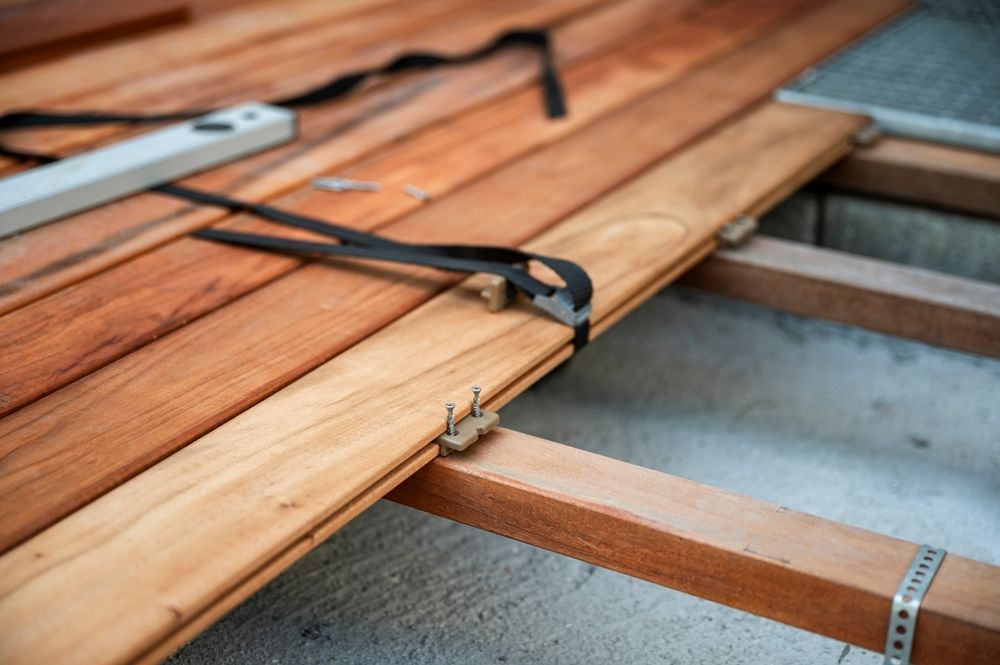
How Limb Impact Damages Below the Surface
A falling tree limb delivers a concentrated point load that wood framing isn't designed to absorb—unlike distributed loads from foot traffic or furniture, a limb strike focuses force at a single location and transfers it downward through the nearest connection points. The result is predictable: surface boards crack or split at the impact point while rim joists, blocking, and post connections absorb transmitted force and may develop cracks or separation that don't appear at the surface. Inspection involves probing connection hardware for looseness, checking ledger-to-house attachments for separation, and confirming that posts haven't shifted on their concrete footings.
After structural repairs and board replacement are complete, the deck surface shows no cracked or missing boards, and the framing underneath carries its designed load capacity again. Pressure washing following debris removal returns the surface to a clean condition—mud, bark staining, and material embedded between boards during the limb strike is cleared from the deck. Rebuilt sections match the existing framing pattern, so the repaired area integrates with the original structure rather than reading as a separate addition.
Deck rebuilding after storm damage may involve partial or full frame replacement depending on how many structural bays were affected—a localized limb strike may affect only one bay, while a larger event can compromise the entire frame. Post-repair pressure washing is not purely cosmetic; organic debris retained in wood surfaces holds moisture, and in Texarkana's humid climate that retained moisture accelerates fiber breakdown at the board surface and between framing members. The repair scope is established after structural assessment—estimates written without inspecting the underlying frame are consistently incomplete.
Questions Before Starting Deck Storm Repairs
Deck and porch repairs after storm damage involve structural decisions that affect both safety and final project cost. The following addresses what property owners typically need to know before work begins.
How do I know if a deck needs full replacement or partial repair after a limb strike?
The extent of damage to the underlying frame—rim joists, ledger board, posts, and beam connections—determines the repair scope; surface board damage alone rarely requires full frame replacement, but compromised structural members do.
What does pressure washing after storm cleanup accomplish for deck wood?
Beyond removing visible mud and debris, pressure washing in Texarkana's humid climate clears organic material that retains moisture against wood surfaces—the primary driver of accelerated rot on storm-damaged decking.
When is a deck safe to use after storm impact?
A deck shouldn't be used until structural members have been inspected and confirmed load-bearing, since a visually intact surface can conceal cracked joists or shifted post connections that fail under normal use loads.
Why does the ledger board require specific inspection after a limb strike?
The ledger connects the deck frame to the house, and transmitted impact loads can loosen lag screws or pull the ledger away from the rim joist—creating a failure point not visible from the deck surface above.
What factors determine the cost of storm deck restoration?
The depth of structural damage below the surface boards, the lumber dimensions required to match the existing frame, and whether any posts shifted on their concrete footings all affect the final repair scope and cost.
A deck that appears stable after a limb strike may still have compromised framing connections that aren't visible from the walking surface. Maverick & Moore Deck and Home Improvement conducts assessments that extend below the deck boards to evaluate the full structural frame—schedule that inspection before the deck is put back in regular use.