
Deck Problems Diagnosed Before They Spread
Deck repair in New Boston for structures showing damaged boards, failing railings, or deteriorated framing that affects safety and function
Soft spots underfoot, boards that flex when walked on, railings that shift when pressure is applied, or visible rot at post bases are all signs that a deck has moved past routine wear and into territory that affects how safely it can be used. Maverick & Moore Deck and Home Improvement repairs decks in New Boston by working through the full structure—surface, railings, stairs, and framing—rather than replacing only what's visible from above and leaving deteriorated components in place below the decking.
Deck repair work begins with a structural inspection of the framing members beneath the decking surface. Joist condition, ledger connection integrity, post bases, and footing exposure are evaluated before any surface boards are removed, because the repair scope changes significantly depending on what the framing reveals. A board replacement job that starts at the surface often uncovers joist damage underneath that must be addressed before new decking can be installed over it—so the inspection drives the sequence rather than the surface appearance.
Schedule a structural review with Maverick & Moore to identify what's causing the visible problems and determine the full scope of repairs needed.
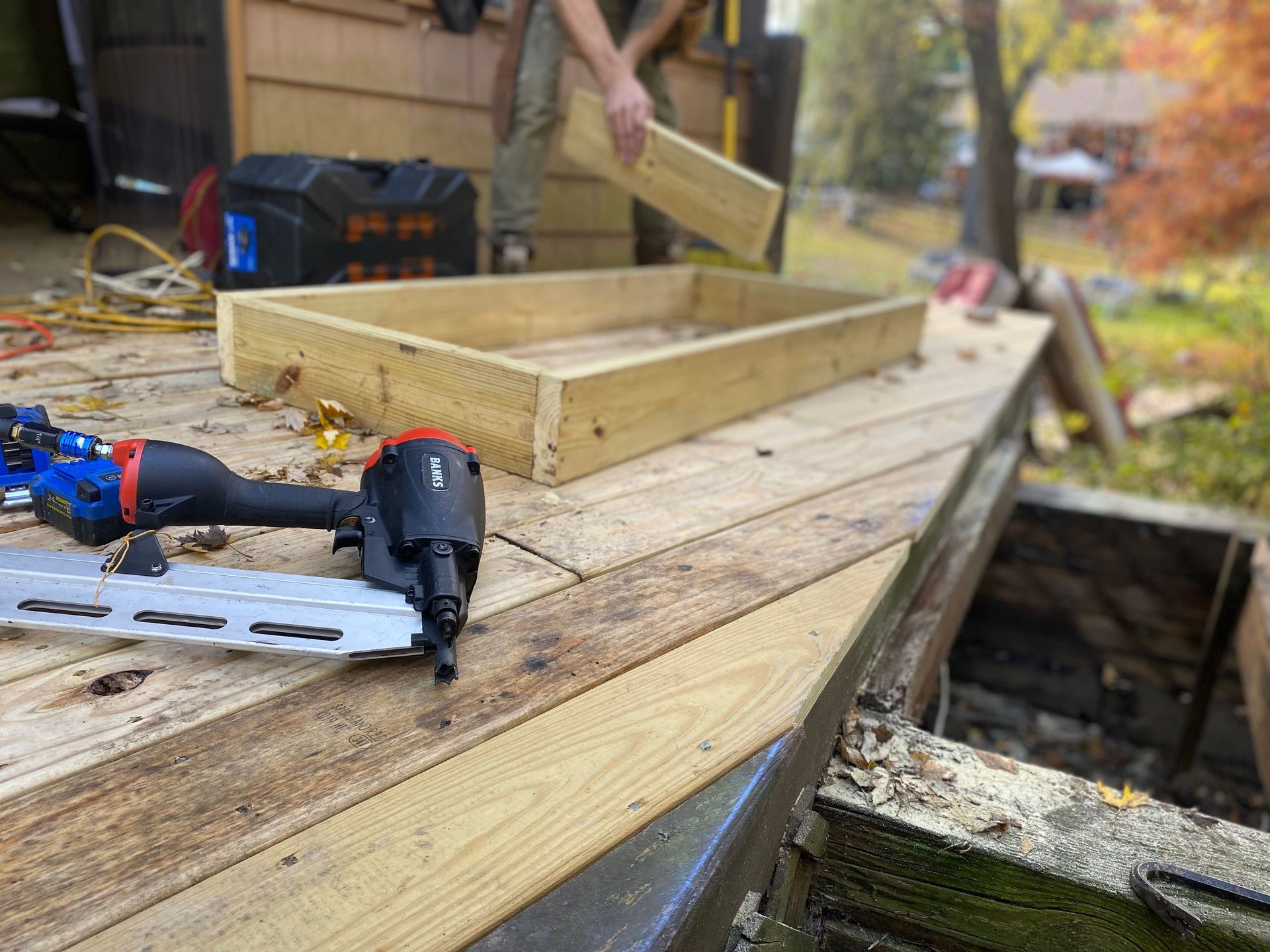
How Deck Repairs Address Surface, Rail, and Structural Problems
Surface board replacement involves more than pulling damaged boards and dropping in new ones. The replacement boards have to match the original decking profile, be fastened to sound joists, and be gapped consistently with the existing surface to allow drainage without creating tripping edges where new meets old. When multiple adjacent boards are damaged, the underlying joist at that location is almost always involved and is inspected and sistered or replaced as part of the same scope of work.
After repairs are complete, the deck surface is level and consistent underfoot—no soft spots, no boards that flex independently of the framing beneath them. Railings hold firm under lateral pressure rather than moving at the post base. Stair treads don't rock, and stringer connections at the top and bottom of the stair run are solid. These are the specific, observable things that confirm the repair addressed the underlying structural problem rather than just covering the surface symptom.
Post base deterioration is a common finding in decks built on older New Boston properties, particularly where posts were set directly into concrete without a standoff base that keeps the end grain clear of standing water. When that condition is found, Maverick & Moore replaces the affected posts and installs appropriate hardware to prevent the same failure pattern from recurring at the same location. Addressing the cause rather than only the visible damage is what determines whether a repaired deck holds up over the long term.
What Property Owners Ask About Deck Repairs
Deck repair questions often start with what's visible at the surface and work back toward what's causing it. These answers explain how repair decisions are made and what the work actually involves at each level of the structure.
How do you tell whether damaged deck boards indicate a surface problem or a framing problem?
Press firmly on the board at mid-span and again directly over a joist. If the board flexes more at mid-span than over the framing, the board itself is the issue. If the board feels soft or gives over the joist as well, the joist beneath is compromised and replacing only the board won't resolve the problem.
What is sistering and when is it used in deck framing repairs?
Sistering involves fastening a new joist alongside a deteriorated one using structural screws or bolts and joist hanger hardware. It restores carrying capacity to a bay where the original joist has decayed without requiring the full framing to be removed and rebuilt.
How are railing post connections repaired when posts move at the base?
The correct fix depends on how the post was originally attached. Through-bolted posts can often be re-secured with new hardware if the rim joist is still sound. Surface-mounted post bases are typically removed and replaced with a through-bolt connection, which carries lateral load more reliably than a surface anchor.
What causes stair stringers to fail and how are they repaired?
Stringers fail most often at the connection points—where the stringer meets the deck framing at the top and where it contacts the ground or a landing surface at the bottom. End grain exposure at those points draws moisture and is the first area to deteriorate. Repair typically involves replacing the stringer and installing a proper stringer anchor at both connection points.
When does a deck repair scope expand beyond the original estimate?
The scope expands when framing damage discovered under the decking surface is more extensive than the surface condition suggested. In New Boston properties where decks were built without protective post bases or adequate ledger flashing, water infiltration into the framing is often wider than the visible soft spots at the surface indicate.
Maverick & Moore Deck and Home Improvement also performs deck repair in Texarkana, Nash, and Redwater. To get a clear picture of what your deck needs, arrange a structural inspection with Maverick & Moore so the full repair scope can be identified before work begins.