
Decks Built to Survive East Texas Humidity
Deck Building & Repair in New Boston for structures exposed to pine-country moisture and red clay soil expansion
Maverick & Moore Deck and Home Improvement handles new deck construction and repair work across the Ark-Tex region, where East Texas humidity and pine-country moisture rot create constant pressure on wood decks. Every new build requires pressure-treated lumber choices calibrated for this climate, along with joist spacing and ledger-board flashing decisions that prevent rot before the first season ends. Proper footings sized for red clay soil expansion determine whether your deck stays level or shifts within two years.
The work involves sizing structural components for the specific soil and weather conditions found in properties along US-82 and homes near Wright Patman Lake, where seasonal moisture swings accelerate wood degradation. Ledger-board flashing applied correctly keeps water from migrating behind the attachment point, and joist spacing set to handle live loads without excessive deflection prevents bounce and premature decking failure.
Schedule a property evaluation to review your deck requirements and soil conditions.
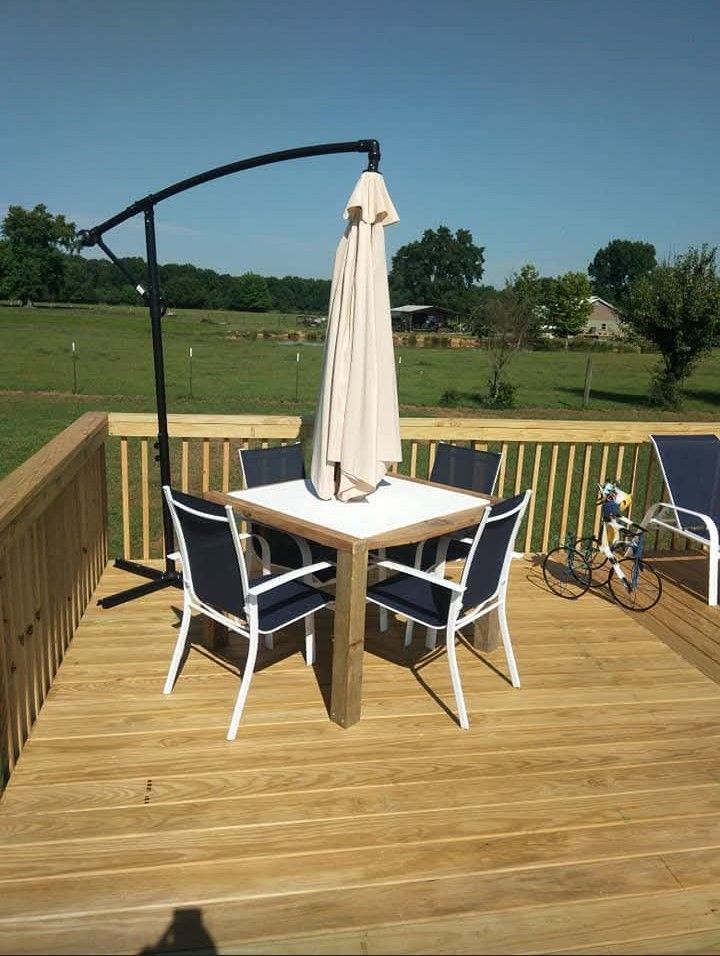
What Proper Deck Construction Requires
New deck builds start with footing depth and diameter calculated for red clay soil expansion, which shifts under seasonal moisture changes and creates uneven load distribution if footings are undersized. Joist spacing and ledger-board flashing decisions made during framing determine whether moisture infiltrates the structure or drains away from critical attachment points. Pressure-treated lumber grading matters in this climate because lower-grade material fails faster under constant humidity exposure.
After construction completes, you'll notice decking boards that remain flat without cupping, joists that don't deflect under foot traffic, and ledger-board connections that stay dry after rain events. Maverick & Moore Deck and Home Improvement sizes every structural element for Ark-Tex weather patterns, so your deck handles humidity cycles without developing soft spots or separation at the house connection.
Repair work addresses rot before it spreads to adjacent framing, replaces failing fasteners with corrosion-resistant hardware, and corrects drainage issues that cause standing water on decking surfaces. The approach depends on whether the damage originates from inadequate flashing, undersized footings, or lumber that wasn't rated for ground-contact exposure in high-moisture areas.
What Homeowners Ask About Deck Work
Residential properties across Bowie County face specific structural and climate challenges that affect how decks are built and how long they last without major repairs.
What determines joist spacing for a new deck?
Joist spacing depends on decking material span rating and expected live loads, with tighter spacing required for composite decking and wider spacing acceptable for thicker hardwood boards. In East Texas, spacing also accounts for moisture-induced deflection that increases over time in high-humidity climates.
How does red clay soil affect deck footings?
Red clay expands and contracts with moisture changes, creating uplift and settling forces that shift undersized footings and cause deck structures to move independently from the house. Footings in New Boston typically require larger diameters and deeper installation than standard residential deck guidelines specify.
When should ledger-board flashing be replaced?
Flashing should be replaced when water stains appear on interior walls adjacent to the deck attachment point, when the ledger board shows soft spots during inspection, or when visible gaps develop between the flashing and the house sheathing.
What causes deck boards to cup or warp?
Cupping occurs when moisture content varies between the top and bottom surfaces of decking boards, typically due to inadequate joist spacing that traps moisture underneath or installation with the bark side facing down. Proper orientation and spacing allow airflow that equalizes moisture content.
How long does pressure-treated lumber last in this climate?
Pressure-treated lumber rated for ground contact typically lasts fifteen to twenty years in East Texas humidity when installed with proper drainage and airflow, but untreated or above-ground-rated lumber can show rot within five years under constant moisture exposure.
Maverick & Moore Deck and Home Improvement builds decks to survive East Texas conditions, not just pass a visual inspection. Request a detailed estimate based on your property's soil type and exposure conditions.