
Floors and Walls That Handle the Climate
Tile Installs in New Boston for kitchens, bathrooms, and other surfaces that survive seasonal humidity shifts
Maverick & Moore Deck and Home Improvement handles tile installation for floors, bathrooms, kitchens, and other surfaces across residential properties in New Boston and the Ark-Tex region. High humidity and temperature swings in this area require flexible grout and proper expansion joints to prevent cracking, particularly in Nash and Atlanta-area homes that experience seasonal movement every year. You see the tile on day one, but the work behind it determines whether that surface stays flat and intact through multiple humid summers and cold snaps.
The installation process includes back-butter tile setting technique and correct joint spacing so the finished surface survives the climate conditions typical in East Texas and Southwest Arkansas. Grout selection and expansion joint placement are informed by the humidity levels this region experiences, not generic product recommendations. Tile work is handled alongside bathroom and kitchen remodeling for consistent quality across the full project, so materials and substrates align from start to finish.
Schedule a property evaluation to review subfloor condition and layout requirements for your tile project.
What Proper Tile Installation Requires
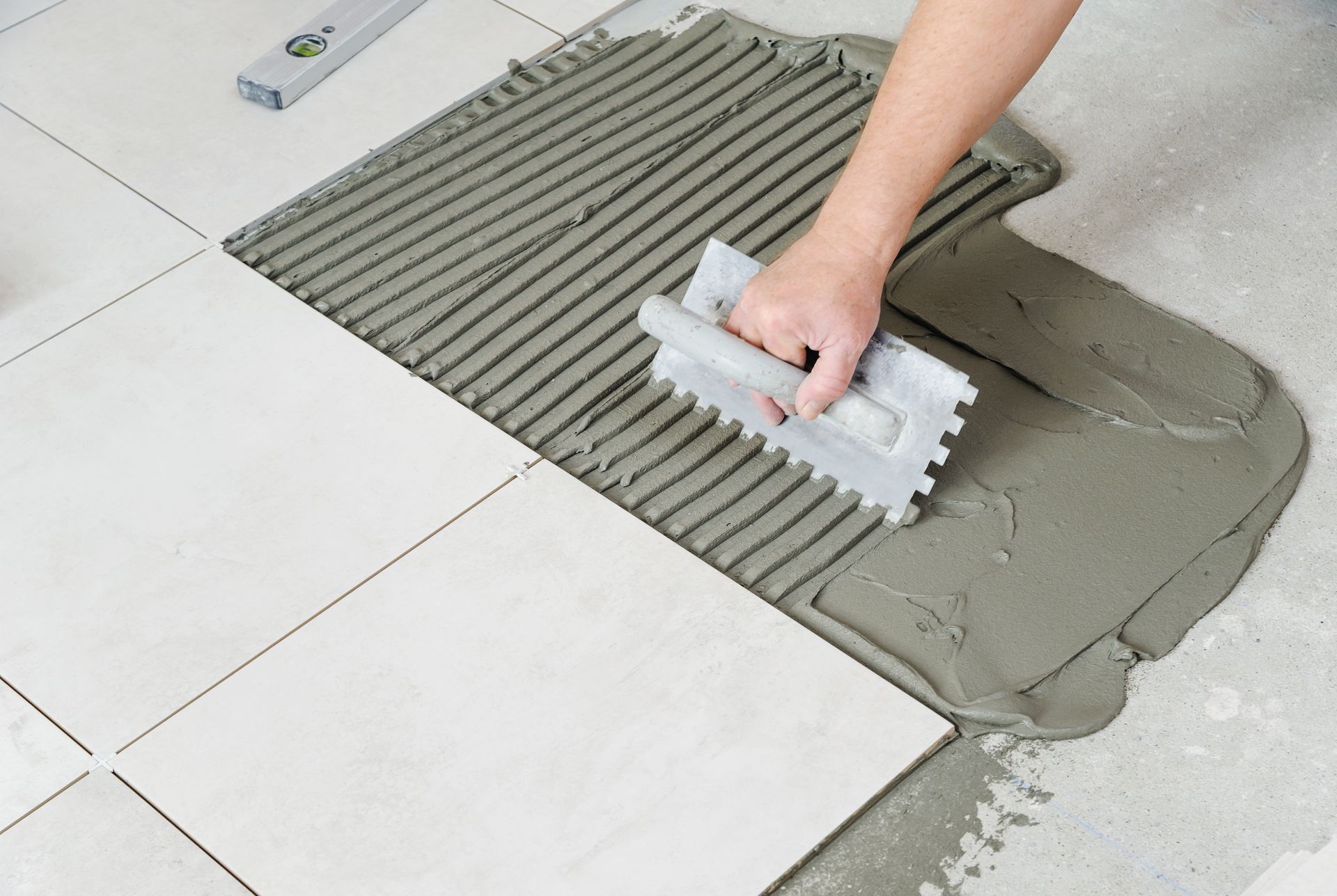
The subfloor must be level and stable before any tile goes down, because an uneven base telegraphs through the finished surface and causes cracked grout lines or loose tiles within a season. Back-buttering each tile with thinset ensures full contact with the substrate, eliminating voids where moisture can collect and compromise the bond. Joint spacing is calculated to allow for seasonal expansion and contraction, which matters more in this climate than in arid regions where temperature swings don't carry the same humidity load.
Once the installation is finished, you notice floors and walls that stay flat and intact through seasonal changes. Grout lines remain uncracked, tiles stay firmly bonded, and surfaces handle daily traffic without shifting or settling. The work holds up because the materials and methods account for the conditions East Texas properties face year after year.
Tile installation is often part of a larger bathroom or kitchen remodeling project, so layout decisions take into account fixture placement, waterproofing requirements, and transition points between different flooring materials. If the tile work is standalone, the scope includes surface prep, layout, setting, grouting, and sealing as needed for the specific application.
Questions Before Starting Your Tile Project
Homeowners in New Boston and surrounding areas often ask similar questions before committing to a tile installation, particularly when humidity and seasonal movement are considerations.
What preparation is required before tile can be installed?
The subfloor must be clean, level, and structurally sound, with any damaged areas repaired and moisture issues addressed before tile work begins.
How does East Texas humidity affect tile installation decisions?
High humidity requires flexible grout formulations and proper expansion joint placement so the installation can handle seasonal movement without cracking or debonding over time.
What is the back-butter technique and why does it matter?
Back-buttering means applying thinset to the back of each tile in addition to the substrate, ensuring full contact and eliminating voids that can trap moisture or weaken the bond.
When should tile work be scheduled as part of a remodeling project?
Tile installation happens after rough plumbing and electrical work is complete and any waterproofing membranes are in place, but before trim and fixture installation.
What types of surfaces can be tiled in a residential home?
Tile works for kitchen and bathroom floors, shower walls, backsplashes, entryways, and other areas where durability and moisture resistance are needed.
Maverick & Moore Deck and Home Improvement coordinates tile installation with other
remodeling work to keep projects on schedule and maintain quality control. Request a detailed estimate based on your specific layout and material preferences.